
SAG Mill vs. Tower Mill vs Ball Mill for Secondary Grinding
In mineral processing, no single machine does all the work in the process. Ore moves through different levels of pulverization—crushing, grinding, often second and tertiary wet and dry particle size reduction processes up to a fine regrind—and each stage has equipment built for that job.
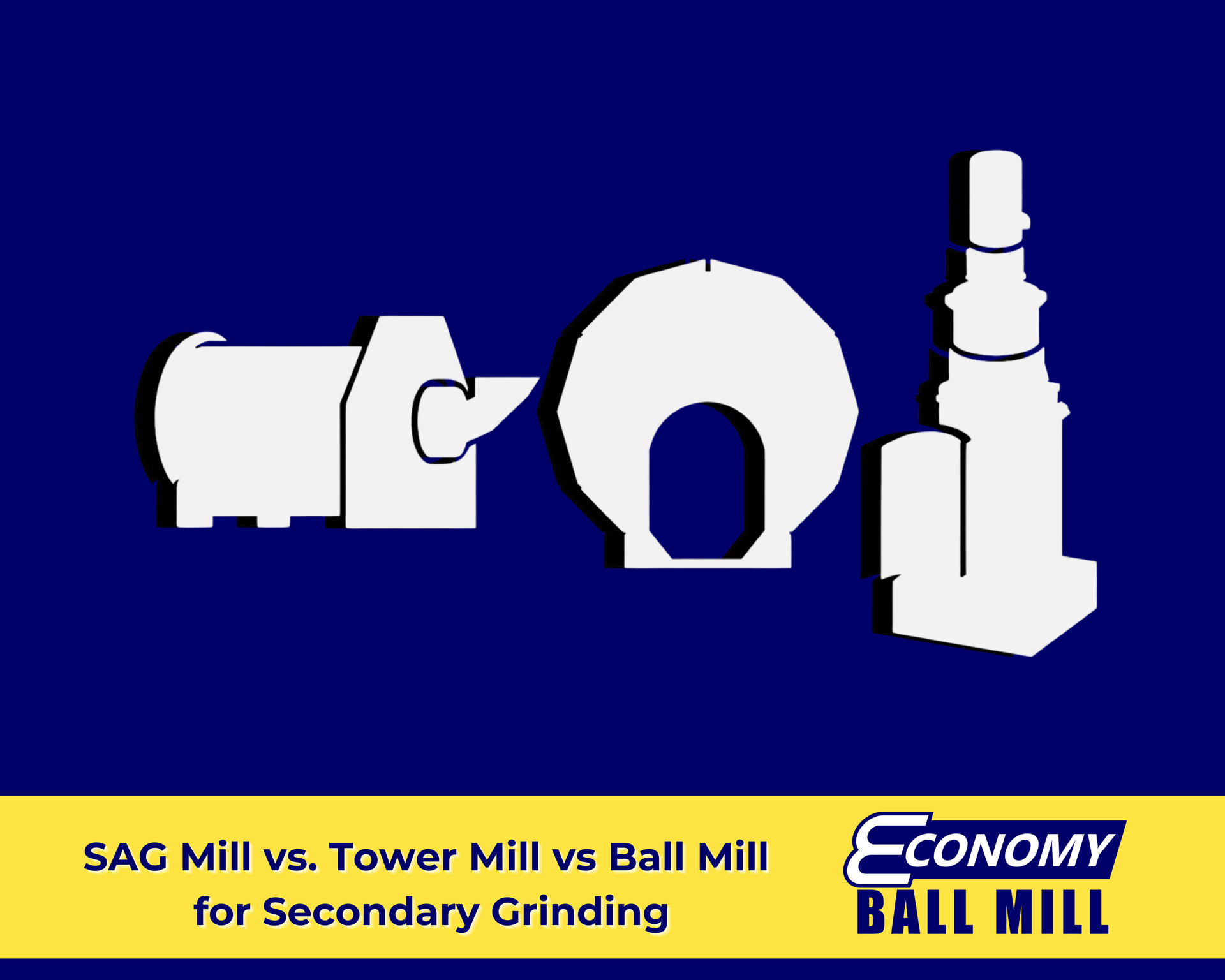
A SAG mill, a ball mill, and a tower mill can all be a part of your processing, and each of these may vary in feed size, target grind, and operating use case day to day.
At Economy Ball Mill, we engineer custom ball mills for mineral processing and other demanding materials. We build ball mills—not SAG mills or tower mills—so rather than tell you a ball mill is always the answer, this guide lays out where a ball mill is genuinely the right tool for grinding.
Mills As Part of Your Grinding System
A SAG mill (semi-autogenous grinding mill) typically handles large, coarse feed straight from the primary crusher and uses the ore itself as part of the grinding media. SAG mills are enormous, high-throughput machines designed to take run-of-mine rock down to a size other equipment can finish.
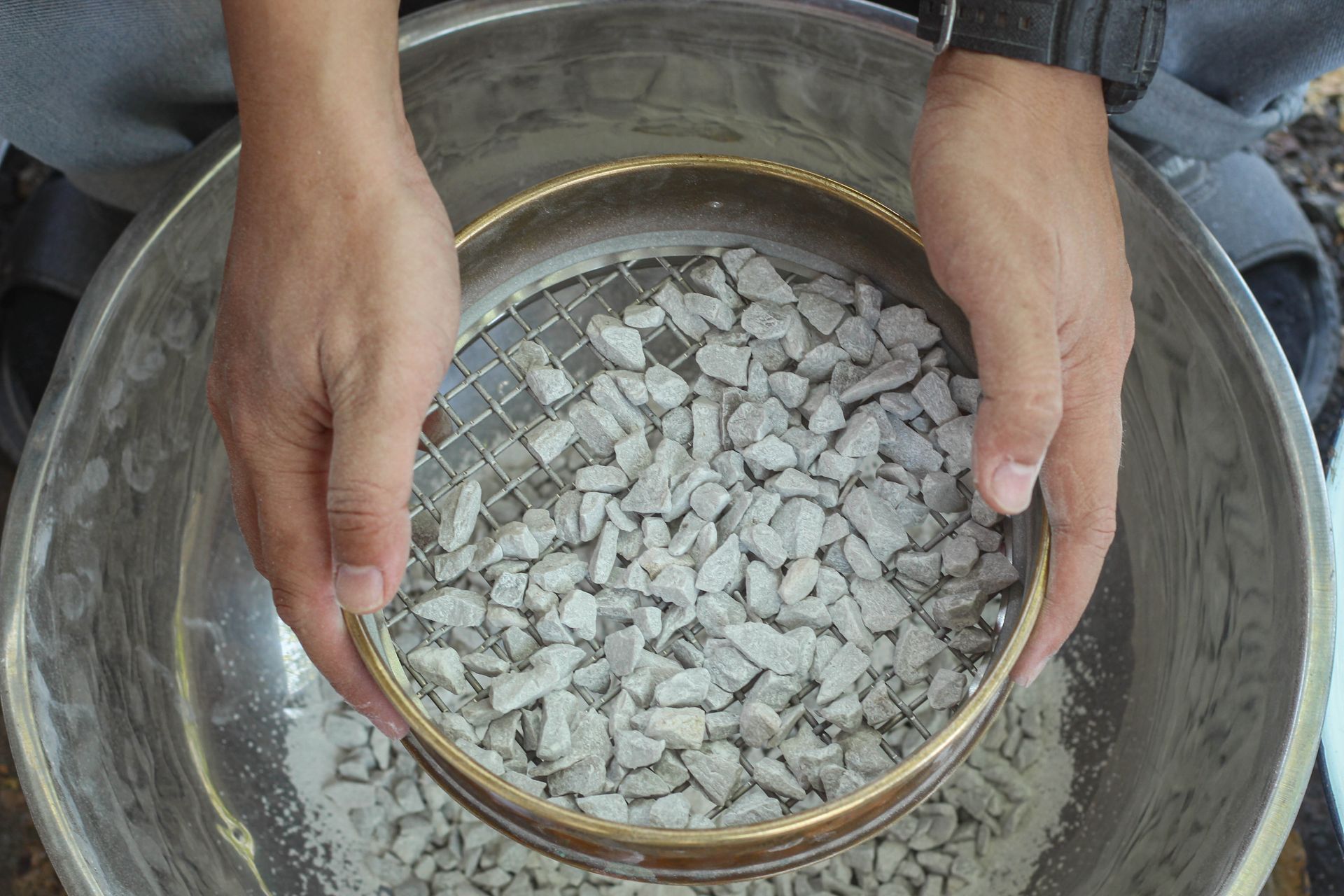
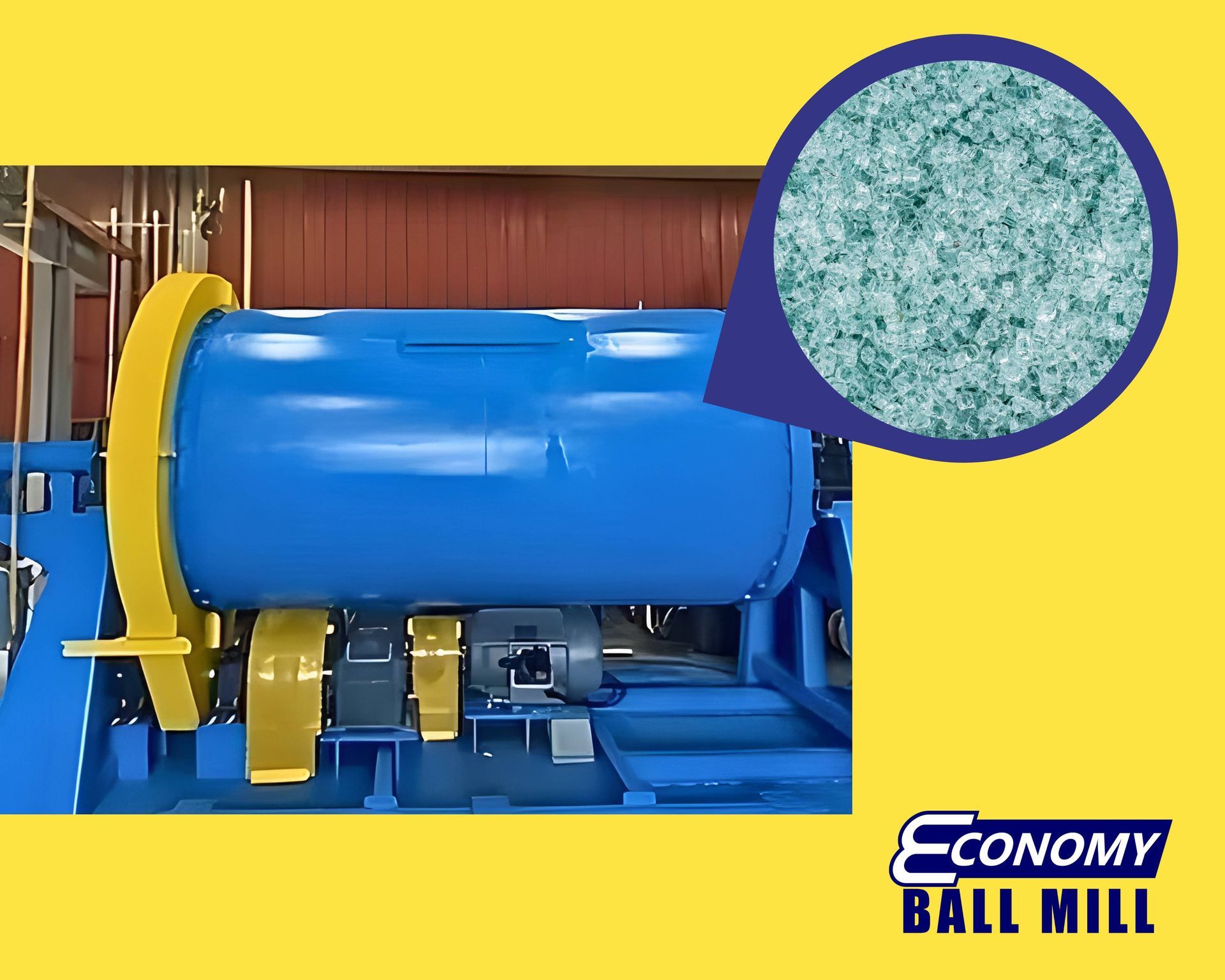
A ball mill is the workhorse of secondary grinding. It takes a variety of coarse or crushed material and grinds it down to the ideal particle sizes using steel or ceramic grinding media. Together, they tumble inside a rotating cylinder, reducing material through impact and attrition. Then, separation processes—air classification, flotation, leaching, magnetic separation, etc—can recover the mineral.
A tower mill (also known as a vertical stirred mill) is built for fine and ultrafine regrind duty. Instead of tumbling, a rotating screw stirs the media. Tower mills are efficient at very fine target sizes but need fine feed to begin with—they are not designed to accept coarse material.
Power Draw
Grinding is usually the single largest energy consumer in a mineral processing plant, so power draw is where comparison starts. The surest path to an accurate power number is testing your actual material in a test mill. Our product development and testing services replicate full-scale ball mill grinding conditions with a small sample, so you can see real cycle time and energy behavior before committing to equipment.
Ball mills draw steady, predictable power for a given feed size, so product size and throughput can be estimated with confidence before the mill is ever built. SAG mills carry the highest single-unit power demand in the circuit, and their specific energy is sensitive to ore size and hardness. When ore variability swings, SAG throughput and power consumption swing with it. Tower mills become more energy-efficient if your target grind sits far below the ball mill's efficient window. If your target sits within it—as most secondary grinding does—the ball mill is hard to beat.
Factory Footprint
A SAG mill dominates a plant. The mill itself, its motor and drive system, its foundations, and the overhead required to service it define the building around them. SAG grinding makes sense at the tonnages that justify that scale.
A tower mill's selling point is a small pad footprint: the vertical orientation keeps floor space down. The tradeoff is height. Tower mills need headroom and access above the mill for maintenance, which matters if you're fitting equipment into an existing structure.
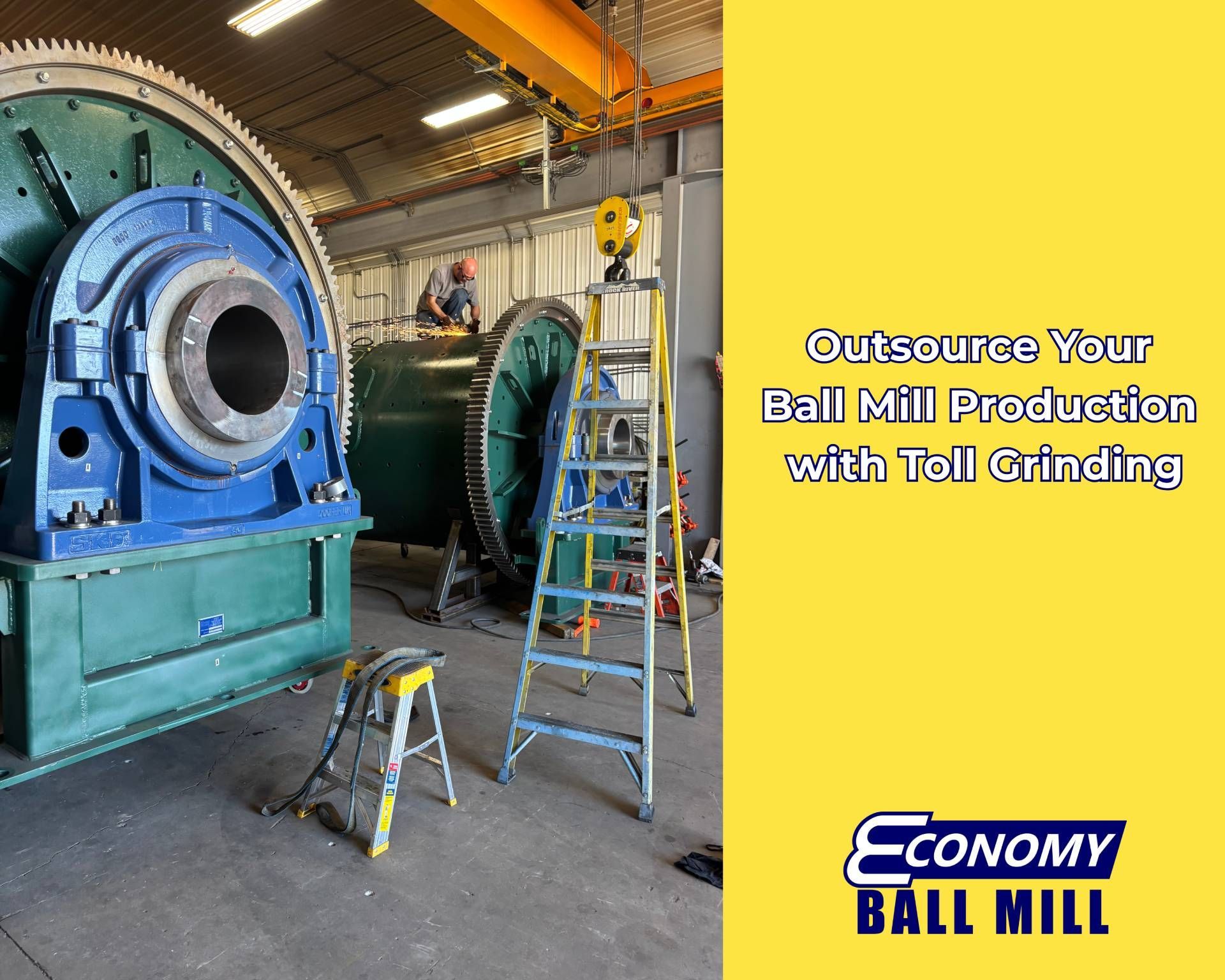
A ball mill occupies a horizontal footprint with modest height requirements and straightforward foundations that are more often able to fit inside an existing building, on conventional foundations, with conventional rigging. And because we build each mill to order, your custom ball mill can be designed around the space you have.
Mill Maintenance
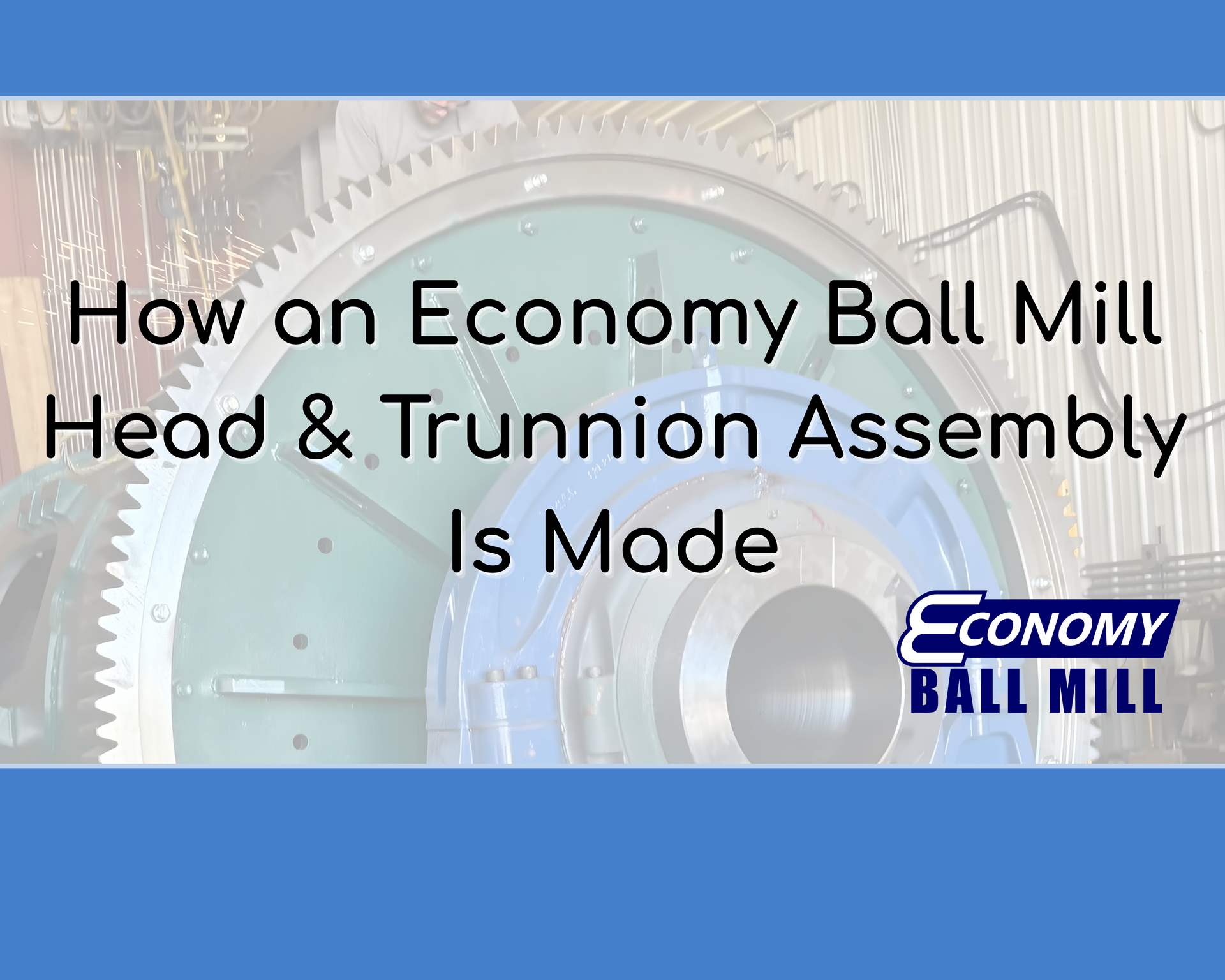
Ball mill maintenance is well understood: keep notice of your liner wear, your bearings, the gear and pinion, and ongoing grinding media—the steady replacement of mining balls as they wear. Media type and ball material and size selection also affect wear rates and grind performance, which is another variable we help you dial in during testing.
When a Ball Mill Is the Right Answer
If you're running a large concentrator moving tens of thousands of tons per day, your system should use a SAG mill and a ball mill system.
For smaller mining operations, specialty mineral processors, pilot plants, and producers working with high-value materials like precious metals or rare earth minerals, the decision may look different. At those scales, a single custom ball mill can carry grinding duty—for controlled particle size.
Engineer Your Mining Ball Mill with Economy Ball Mill
The right grinding equipment isn't the biggest machine or the newest technology—it's the one matched to you. Based in Tollesboro, Kentucky, Economy Ball Mill has over 70 years in business serving clients across the US and worldwide with custom-built ball mill solutions.
Contact us online or give us a call at (606) 798-5724 to discuss the custom ball mill for your mineral processing.