
Scaling Tests from a Lab Ball Mill to Production
For R&D teams and process engineers, particle size reduction testing with a custom ball mill is not just to prove that a material can be milled. The goal is to prove that the same performance can be repeated at production scale without sacrificing particle size, consistency, throughput, or energy efficiency.
Moving from testing a ball mill to ordering your own full production system is where a lot of promising scalable processes start once you increase ball mill cylinder size, grinding media, raw material load, batch volume, or residence time.
That is where a well-run mill laboratory becomes the foundation for an OEM design plan that actually works on your plant floor.
What Your Lab Ball Mill Test Should Really Prove
A good test should help you target particle size.
It also should help you understand how the material responds to impact and attrition, how fast the grind progresses should be, whether wet or dry conditions perform better, how sensitive the material is to heat or contamination, and how strongly the final result depends on media size and residence time. When you document those variables, they create a useful path to scale up.
When a Smaller Mill Makes Sense
There is a reason many early-stage trials begin with a smaller mill or even a planetary ball mill.
These are especially useful when material is limited or when the team needs to compare multiple conditions quickly. They are commonly used for fine grinding, mixing, homogenizing, and small-volume sample preparation.
These are not a one-to-one stand-in for a large production ball mills.
In practice, performance can shift even when the final spec looks similar on paper, because the path to that result may demand different media sizing, liner choices, or batch parameters at full scale.
Our Path: Test, Interpret, Then Build
The most reliable path from a milling to production usually follows four steps:
- Define the real success target: Define the particle size distribution, throughput target, limits, and cycle time you actually need.
- Run trials under meaningful conditions: Your test should reflect the real process as closely as possible.
- Record the variables that created the result: This includes any signs of wear, heat buildup, or agglomeration that occur in the process.
- Validate before full production: Before ordering a full-scale system, the smartest move is to confirm that the test result still holds in a larger, more production-relevant mill.
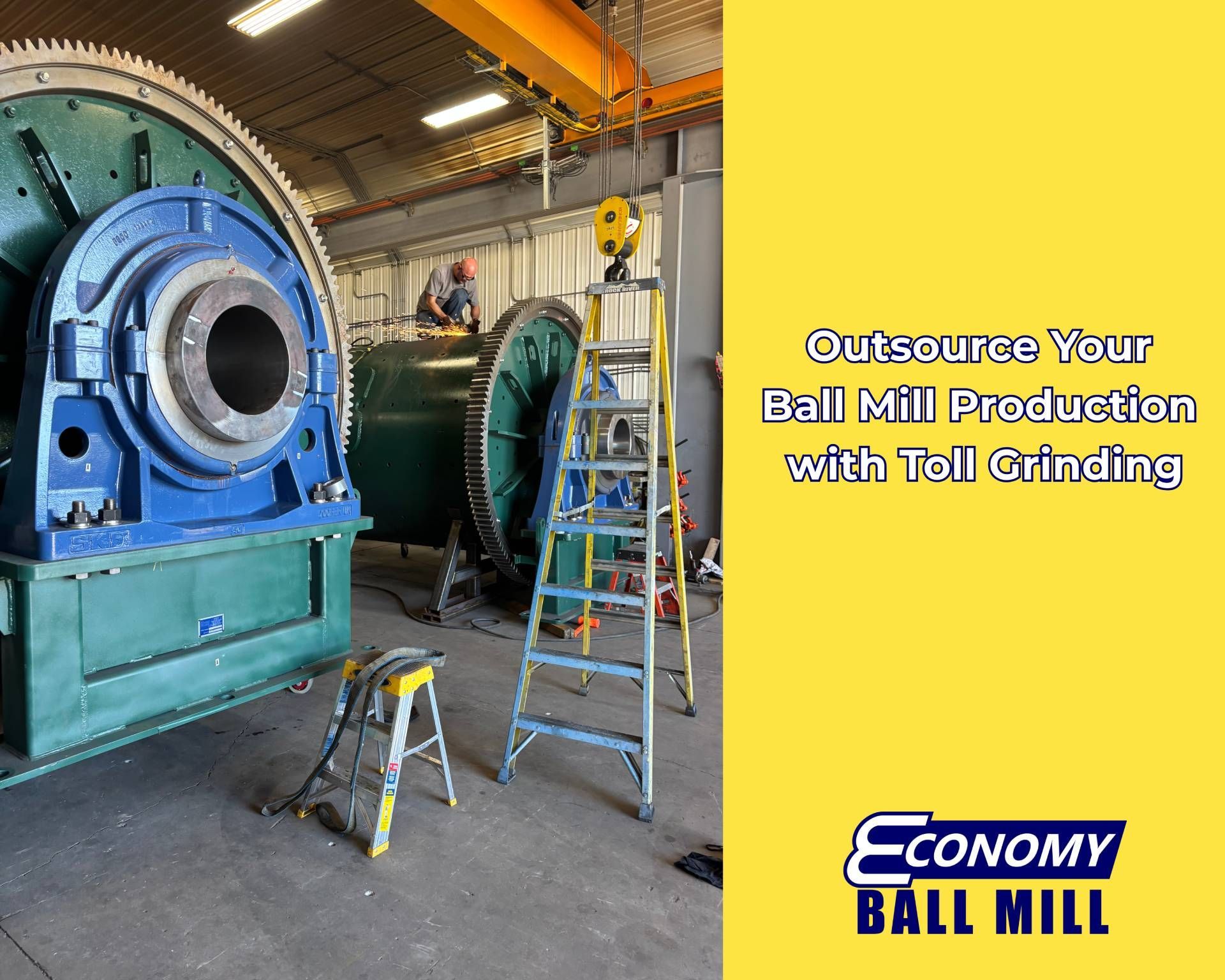
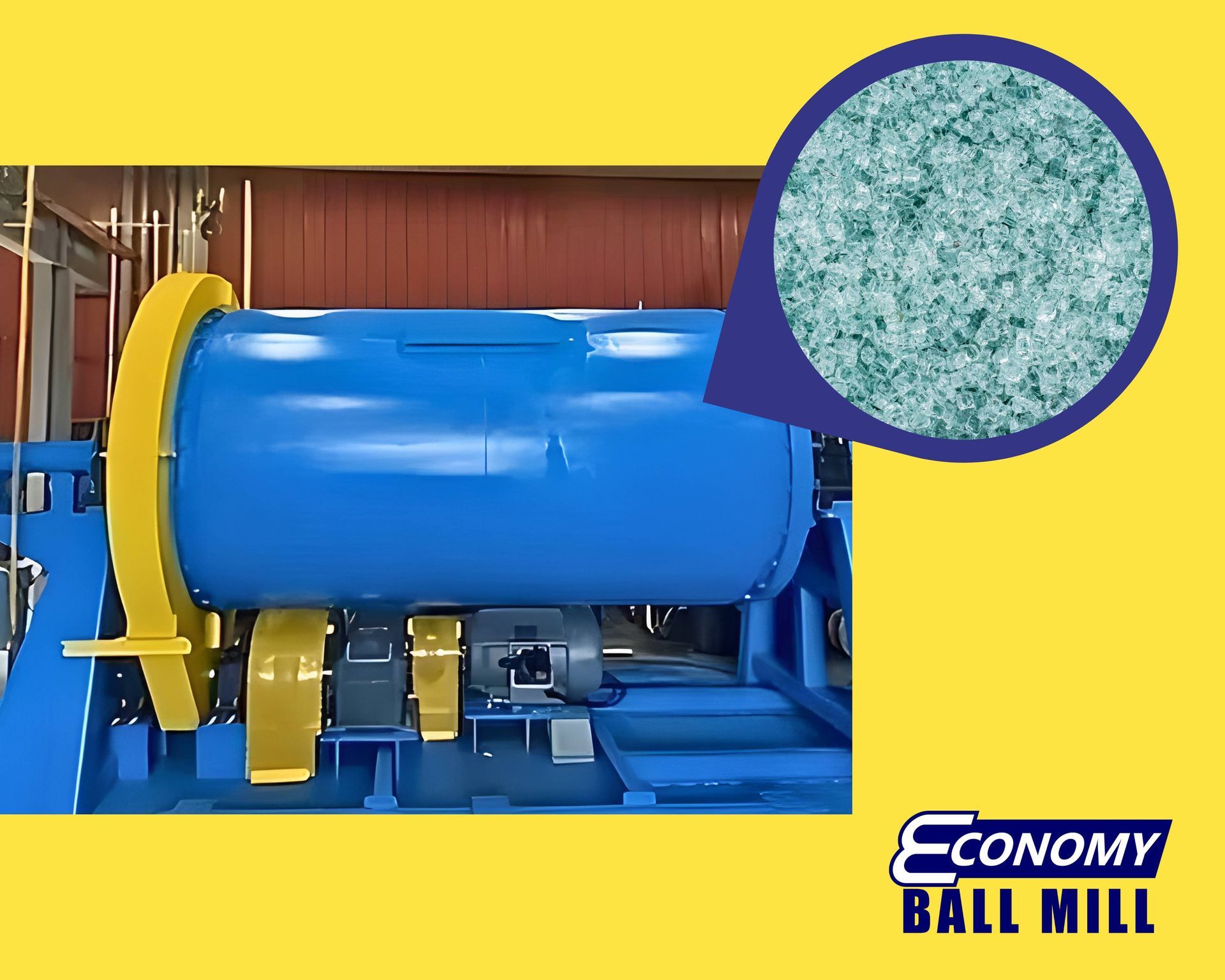
This is where Economy Ball Mill’s process stands out. The company’s in-house product development and testing program uses a 20" x 28" horizontal tester ball mill that is intended to replicate the function of its full-sized custom equipment. It can evaluate material using as little as 10 gallons, supports both wet and dry testing, and allows the team to adjust variables like residence time, media size, and rotational speed.
Economy Ball Mill also offers toll milling for validation in larger batches—up to six times the initial test size—before a customer commits to a production machine.
Once the testing phase produces a dependable grind profile, the real engineering work begins. Our team can begin translating your measured behavior from the test phase into a custom ball mill that is sized and configured for the real job.
From Small Trial to Full-Scale Confidence
For many manufacturers, the smartest path forward is not jumping directly to a large capital purchase. It is starting with a smaller test mill or toll milling process, then moving into a more production-representative test program before commissioning a full-scale system.
Economy Ball Mill positions its testing and manufacturing process around a path from small R&D testing to larger validation and then to custom-built production systems, with support for choosing mill size, grinding media, and liner configurations based on proven test performance.
Partner With Economy Ball Mill for Scale-Up That Makes Sense
Testing should not leave you with more uncertainty than you started with. When testing is done correctly, it gives your team the data to move forward with confidence. Economy Ball Mill is your OEM that understands scale-up.
Learn how we can create a production mill designed for your actual material, process conditions, and output goals.
We manufacture custom ball mills for clients across the United States and internationally from our facilities in Tollesboro, Kentucky. Contact us online or call (606) 386-4598 to discuss your needs with our team.